Rup halin ( about me)

Ảnh của tôi
Dalam tanâh Yuen hu anâk Cam saong nagar Cam

Sang/Home

Hiển thị các bài đăng có nhãn Dalikal Cam. Hiển thị tất cả bài đăng

Thứ Hai, 11 tháng 4, 2011

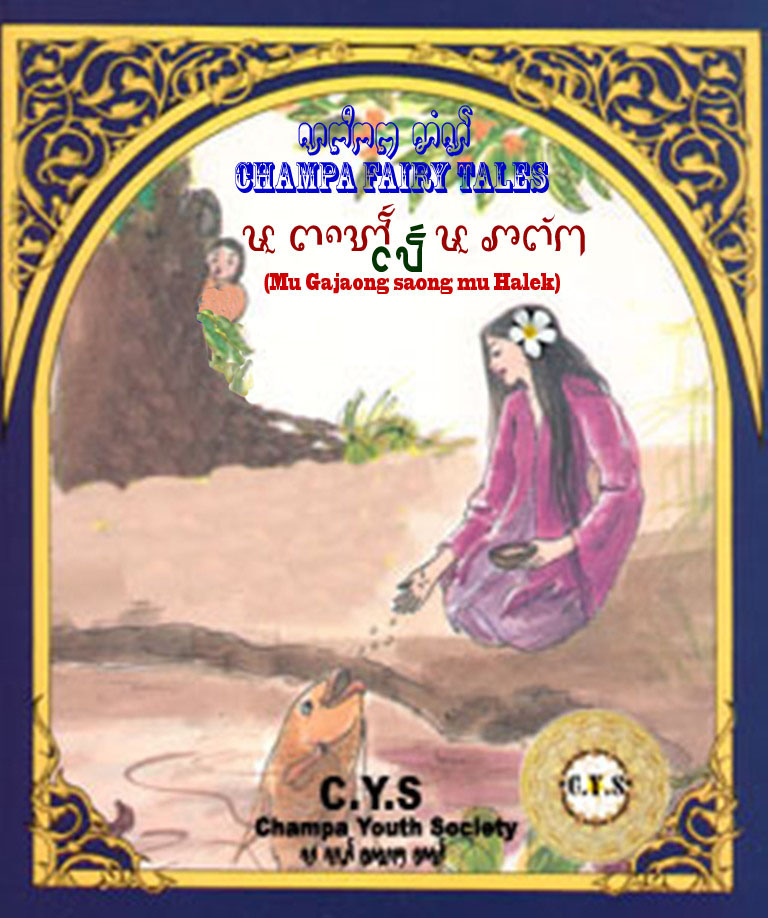
Truyện cổ tích Chăm( Champa fairy tales) : Mu Gajaong saong mu Halek( part 2)

                          Truyện cổ tích Chăm( Champa fairy tales) :
                             Mu Gajaong saong mu Halek( part 2)

                                                 Sưu tầm : Putra Champa


Nan mu Halek puec balek min, nyu kalaik ikan di dalam canaih mu Gajaong min. Baraw mâng mu Gajaong thau nan gwen mu Gajaong thau ka mu Halek kalaik ikan di canaih nyu min. Mu gajaong di puec nao o. Khal danal di dalam hatai mâyah   hi puec ka nyu, blaoh huec ka nyu ataong lac. Baraw mâng mu Gajaong daok canâng sa drei, blaoh bwahkar pajan lac drei mâng tuei mâng dhar baik. Oh hu inâ lijan,, oh hu amâ, mâyah sa drei. Mâyah urang kalaik ikan di dalam canaih drei, lijan o kien puec ka urang, yah kien huec kadha ka urang ataong drei di dalam galai ni blaoh di hu sei hi daok drei o. Blaoh daok canâng  hia bwahkar sa drei. Kien nao sang blaoh di hu ikan o mâk hagait ba nao ka maik, blaoh huec ka-nda ka maik ataong lac. Baraw mâng mu Gajoang nyu trun aia danao nyuk rapek dwah mâk ikan mâng taklak hu sa drei dwa drei ba nao caga kalah di maik ataong. Braw mâng nyu trun danao mâk hu ikan. Baraw mâng nyu mâk hu kalau drei ikan caklait hu sa drei ikan caraok tra.
      Halei mu Halek nan nao sang dahlau paje. Baraw mâng mu Gajoang ba ikan nan nao sang brei ka maik kalau drei ikan caklait: daok wek sa drei ikan caraok hu mâk padap wek sa drei ikan caraok nyu di brei ka maik raong saong mu Halek thau o: nyu ba nao caik dalam bangun piaoh raong ngap gep. Halei ikan nyu ba ano sang nan maik nyu lac: “ dakik lo! Padar nyu ngap adei mu Halek baik: mu Halek nyu mâk ikan hu lo. Ni mu Gajoang kajaik kien hia nan mu Halek jieng ai”. Halai mu Gajoang nan di hu ndom wek saong amaik nyu lac: Mu Halek kalaik ikan di nyu, Panuec nan mu Gajoang di hu ndom wek ka maik raong nhu thau o. Mâyah muk maik nyu padar nyu ew mu Halek ew ai, nyu lajan nyu halar ew ai min, nyu di puec sibar o.
       Baraw mâng muk maik raong nyu ndom saong mu Gajoang lac: “ arak ni khasia daok jwai daok saoh jwai, lijan thi hu bruk hagiat hi ngap o.Kahlaom yau nan hâ khik daphwel pabé maik baraw balei ni baik. Anâk ngap tarieng nao galang pabé nan baik. “ Baraw mâng mu Gajaong boh maik puec yau nangalam sa baik hawei tabaik nao peh war pabé tiap tabiak nao galang. Gwen tuk mai hwak nan mâk rasei hwa ba pak bangun ikan kung nyu raong.. Nan blaoh nyu hwak gwen craok rasei tamâ nan nyu daok di pabah bangun blaoh nyu ew: “ he! Craok, talaik mai ka ai dwen rasei hwak , blaoh bang saong ca ai: hâ hawak rasei bhanrai, kau hwak rasei gamoaw “. Baraw mâng ikan hamit cap saw blaoh ikan mâng galac ciet tagok ngaok thublaoh bang hwak saong su gep, ngap adei ca ai satain. Halei ikan nyu raong nan nyu di beri ka maik raong nyu saong mu Halek thau lac ka nyu raong ikan nan o. Harei halei mu Gajaong ba rasei daok pak bangun ka ikan nan bang; harei halei lijan mu Gajaong nao pak bangun nan ka ikan nan bang; harei halei mu Gajaong nao pak bangun nan lajan nyu nao rei sa ratuh harei lijan nyu nao taong cabih di hu kalaih di nyu nao rawang ikan nan o.
     Baraw mâng mu Halek boh mu Gajoang nao pak bangun nan ralo bang ralo di thau ka mu Gajaong nao ngap bruk hagaito. Baraw mâng mu Halek nao krok iep. Baraw mâng mu Halek thau ka mu Gajoang rong ikan dalam bangun nan. Baraw mâng harei hadei mu Gajoang galang pabé , blaoh pabé bang drap urang, blaoh urang mâk pabé nan blaoh nyu jal daok likau di urang kung mâk nan. Baraw mâng mu Halek daok di sang bep jala: baraw mâng mu Halek puec lac: “ bien ni sei urang pep mâk o boh mu Gajoang mai sang hwak o. “ Baraw mâng mu Halek boh jwa, bloah mu Halek mâk rasei ba nao pak bangun ikan mu Gajoang raong nan. Baraw mâng nyu bwah di mu Gajoang ew ikan nan lac:” he! Caraok gailaiy mai dwen rasei hwak blaoh hwak saong ca ai baik!” Baraw mâng ikan nan pacom lac mu Gajoang ew nyu: baraw mâng ikan nanciet tangok mai bang. Blaoh mu Halek nyu pah mâk ikan nan ba sao sang, blaoh nyu mâk dhaong nyu caok ikan jieng klau avait, blaoh nyu mâk buh dalam glah hatuk masam, blaoh nyu bang sa drei nyu, nhu di brei ka amaik nyu thau o.

 Baraw mâng mu Gajoang mai sang hwak, blaoh nyu mâk rasei ba nao pak bangun blaoh nyu ew ikan nan tagok mai hwak” he! Caraok, galaiy tangok mai dwen rasei hwak bang saong ca ai!” . blaoh di nyu ew di dang nam sap, di boh ikan nan tagok bang lasei o, . Baraw mâng nyu padrut padrai lo sanâng lac ka nyu di hu gep matian o, blaoh nyu mâk ikan nan mai raong piah ngap sa tian. Arak ni urang halei nyu mai kalaik sit di boh o ya ni. Baraw mâng nyu hia lac mâng daih tani nyu dwel kaywa hu ikan ni min: sa harei ni lahik ikannan,  nyu di hu hadar ka bang saong hwak o. Malam harei nan di hu tuk di hu madah malam tuk halei jan hia malam di hia baih hadah dia hia biah sup.

Truyện cổ tích Chăm( Champa fairy tales) : Mu Gajaong saong mu Halek( part 1)

                     Truyện cổ tích Chăm( Champa fairy tales) :
                        Mu Gajaong saong mu Halek( part 1)


                                                            Sưu tầm: Putra Champa  


        Ni dalikal Mu Gajaong saong mu Halek. Di tak kal mu Gajaong soang mu Halek dwa urang nyu anâk raong saong anâk jieng muk taha. Nan mu Gajaong nyu anâk raong halei. Mu Halek nan anâk jieng halei. Dwa urang nan dong gep min di thau lac ka urang halei jieng ai o., di thau lac ka urang halei jieng adei o. nasak aséh yau gep min. Barau muk maik nan drai di hatai harei nan blaoh padar mu Halek ew mu Gajaong ew ai. Brau mâng mu Halek nyu ndom wek lac: “ mu Gajaong dang dahlak, dahlak lijan dang mu Gajaong rei, halei, a maik! Padar dahlak ew mu Gajaong ew ai. Arak ni dahlak ew mu Gajaong di ew ai o. Mâyah maik khing ngap sibar di dahlak lijan halal rei”. Baraw mâh maik nyu ndom wek lac: “ arak ni hâ, mu Gajaong, hâ ew mu Halek sa harei ew ai sa harei ew magait”. Braw mu Halek nan khan wek saong muk maik nyu lac: “ Dahlak malau lo, ine ! mocai nyu, nyu ew ai bitruh ew ai, mâyah ew magait bitruh ew magait: dahlak malau lo di gep pwal. Dahlak klak awak blaoh nao nagar jalan jieng takai.

    Braw mâng muk maik padar dwa urang nan nao mâk ikan, nyu brei sa urang sa bauoh canaih yau. Bloah dwa urang lac:” yah urang mâyah halei nyu yuw hu ikan ralo nan urang nan je jieng ai. Mâyah urang halei yuw ikan hu dakik nan urang nan je jieng adei”. Braw mâng muk maik nan padar dwa urang nan mâk  dwa baoh canaih nao aia baik bidrah. Braw mâng  dwa urang nan tanak canaih tabaik nao yuw ikan. Brau mâng dwa urang nan nyu nao boh sa baoh danao baik praong siam ndei hareh. Danao nan baik lo barei barim mata ikan hagait lijan hâ rei dalam danao nan. Braw mâng mu Gajoang truh nyuk aia nan mâk ikan. Halei mu Halek alah lo, nyu di truh nyuk mâk ikan o. Braw ka mu Gajoang puec ka mu Halek lac: “ sibar boh aia ye? Hâ o trun mâk ikan o?” baraw mu Halek khasia daok ngoak thu blaoh main tasaoh yau nan. Baraw mâng mu Halek boh mu Gajaong puec lo, blaoh mâng mu Halek trun di aia yuw mâk ikan pagap ni yaom pak drei ikan nan : baraw mâng mu Halek boh mu Gajaong mâk ikan blwak di nyu pagap sa pluh drei ikan. Braw mâng nyu gadung blaoh trun di aia mâk ikan laan lo di thau labik khi nap sibar o bih. Baraw mâng mu Halek ndom saong mu Gajaong lac: “Yah aia laan lo, tagok nao daok mangaok thu, baik pa abih laan caik. “ Baraw mu Gajaong pang kadha mu Halek, togok nao daok ngoak thu, blaoh mâk akhan masam pa abih laan nan caik.Halei canaih ikan mu Gajoang caik pak danau nan. Halei mu Halek daok  Rapak dalam danau nan dijih canaih ikan mu Gajaong caik nan, halei mu Halek daok  rapek nao rapek mai sa drei nyu tajih canaih ikan mu Gajaong caik nan. Balaoh mu Halek daok puec sadrei lac:” mu Gajaong nyu mâk ikan ralo blwak di drei, hacit tra blaoh nyu ba ikan nao nao, blaoh inâ drei padar drei ew nyu ew ai, malau o thau libik hi nyap sibar. Drei nan anâk jieng lac, nyu anâk raong, blaoh deri ew nyu ew ai, malau lo o ciep. Bloah tep di kal maik drei hi padar drei ew nyu nan ew ai. Bloah drei hi ndom wek lac:” nyu dang dahlak, dahlak je dang mu Gajaong, dahlak di ew nyu bloah ew ai o. Bloah arak ni nyu mâk ikan ikan hu ralo blwak di drei. Blaoh sa tra maik drei padar drei ew nyu ew ai, di nan arak ni drei alaik ikan di mu Gajaong baik, bloah ba nao sang maik drei boh. Blaoh ka maik drei brei ka drei jieng ca ai mu Gajaong”.
Barqw mâng nyu kalaik ikan dalam canaih mu Gajoang buh tamâ dalam canaih nyu
             Baraw mâng mu Gajoang habih laan blaoh trun mau pak canaih ikan, boh daok daom canaih ikan saoh min di boh sa drei ikan o  dalam canaih nan boh daom canaih saoh min. baraw mu Gajaong tanyi mu Halek lac: “ hâ! Mu Halek, hâ mâk ikan kau caik dalam canaih di rei hai di oh, kau caik taphia aia, daok chlaok ikan pak ni. Balaoh di thap di sei mâk o boh oh ya ni ikan kau caik dalam canaih sibar oh boh sa deri o ya ni”. Baraw mâng mu Halek ndom wek kamlah lac:” kau thi hu thau o, mâng pagé  tani kau daok chlaoh pak ni sa drei kuw ai min. Kau di hu boh canaih hâ caik pak halei o, kal nan kau hamit ak daok kamrau pak ikan, hâ mâng ikan di ak cagaong ba nao bâng min. Na? mâyah ka sia lac kau kalaik ikan hâ, kau di hu ikan o: ikan kau dang sa pluh pak drei ini rei”.

Thứ Năm, 10 tháng 2, 2011

Nỗi lòng của "Nai mai mâng Makah" ở thế kỉ 21

                                                               Putra Champa
"Nai mai mâng Makah" trong tiếng Malaysia là " Tuan putri dari Kelantan" tạm dịch là " Nàng công chúa đến từ Makah" là một ariya có thể nói là một tác phẩm truyện thơ khá nổi tiếng trong cộng đồng Chăm nói chung và giới nghiên cứu văn hóa Chăm nói riêng. Bởi tác phẩm đã bậc lên được vấn đề nóng bỏng trong mọi thời đại của xã hội Chăm. Đó là đạo Hồi ( Islam) và dân tộc Chăm.
                       Thực ra trong xã hội ngày nay với phương tiện truyền thông tiên tiến thì chắc rằng ai ai cũng phải có một chút ít kiến thức để hình dung Islam là gì ! và trong xã hội Việt Nam ngườt ta còn còn hiểu rõ rằng khi nhắc đến Islam thì tiếp theo đó là dân tộc Chăm vì ở Việt Nam sắc tộc này theo Islam là chiếm đa số. Nhưng ở đây tôi xin tách làm hai vế Islam và dân tộc Chăm để làm rõ sự nhận định của tôi mà tôi sắp trình bài.
                        "Nai mai mâng Makah" là một câu chuyện thơ nói về một mối tình thật đẹp giữa một vị vua Champa và một nàng công chúa đến từ Makah ( nay là tiểu bang Kelantan thuộc liên bang Malaysia). Nàng đến để kiêu gọi vị hoàn đế cải đạo sang Islam. Nhưng vì vận mệnh dân tộc , ngài không dám đánh đổi vận mện lớn lao này để lấy hạnh phúc của bản thân , nên đã từ chối lời đề nghị, dù rằng ngài đã rất yêu nàng.
                                          "Suan saai laik tamâ balaoh mbalung
                                           O thei ra thung, o thei ra weh"
Tạm dịch:
                                            "Hồn anh rơi rụng đấm chìm
                                             Chẳng ai kéo ,lại chẳng người vớt lên"
                       Ngài hy sinh tất cả tình cảm riêng tư của mình vì ngài biết:
                                              "Hajieng pangan Cam Gok
                                               Hajieng Cawa Bini Ralaoh, pacalah Bhummi"
Tạm dịch:
                                                 Thành tên Chăm Gok
                                     Thành( người) Java Bini( đạo) Ralaoh( Allah), đổ nát quê hương.
                       Ở đây chúng ta nên nhìn nhận kĩ, phải chăng vị vua này nghĩ rằng Islam chính là nguồn gốc gây xung đột xã hội bởi chính bản thân của nó, hay nói một cách dễ hiểu là những luật tục thờ độc thần (Allah) sẽ cấu xé nền tảng văn hóa Chăm vốn theo tín ngưỡng đa thần và làm đảo lộn nền tảng tín ngưỡng của cộng đồng Hồi giáo Bini mà các vị vua trước vốn đã dung hòa thành công và làm tương đồng giữa cộng đồng Bini và Bà Chăm??? để làm rõ vấn đề hơn ta hãy lật lại một chút những trang sử của cha ông.
                       Hiện nay cộng đồng sắc tộc Chăm đa số theo Islam( khoảng 80%). Tất cả những người Chăm theo đạo Hồi chính thống này  là con cháu của những người Chăm di cư từ những thế kỉ trước ( ở đây không bàn tới người Islam ở Ninh Thuận như palei Ram...vì họ chỉ mới cải đạo vài thập niên gần đây thông qua người Chăm Châu đốc). Đã có ai đặt câu hỏi , khi họ di cư , những người Chăm này là Islam hay Bini????.Tôi cũng chưa dám khẳng định vì chẳng phải nhà nghiên cứu gì, vả lại kiến thức về Chăm cũng chẳng bằng ai, nhưng cũng mạo muội thông qua những hiểu biết có giới hạn của mình để đưa ra nhận định họ là người Bini(Bàni). Lần tìm về những ngôi mộ cổ trong khuôn viên thánh đường làng, chúng ta dễ nhận thấy được biểu tượng chạm khắc trên tấm bia mộ không phải là hình trăng lưỡi liềm và ngôi sao như ngày nay( biểu tượng của Islam) mà là biểu tượng âm dương( vòng tròn được chia đều ra bởi một làn xoắn " dấu ngã" ở giữa) vốn được thấy rất nhiều trong sang/thang Mưkhik của người Bini. Ngôi thánh đường ở Châu giang( Tân Châu- An Giang) trước kia cũng được xây bằng gỗ không tuân theo những đặc điểm của kiến trúc Islam mà như một ngôi chùa với kiến trúc hình mái hai tầng, sau này gỡ bỏ xây mới như ngày nay. Ở Cambuchia cũng có một công đồng Chăm ( Cham jahed)họ lẫn lộn nhiều nghi lễ Islam và tập tục truyền thống của họ, theo một số nhà nghiên cứu thì họ cũng thờ đầu bò ( bò thần Nadin-một vị thần trong tín ngưỡng Balamon ??). Trong quá trình cộng cư tiếp xúc với người Java ( vốn theo Hồi giáo chính thống) và nhận thấy sự sai lệch trong tín ngưỡng của mình đang theo, vậy là họ cải sang Islam .Điều đó giả thích tại sao chỉ có những người Chăm di cư là theo Islam còn những người anh em còn lại ở Panduranga vẫn theo Bini.
                    Ở đây vấn đề trọng tâm mà tôi muốn đề cập không phải là việc quảng bá Islam. Mà tôi muốn chúng ta nhìn nhận rõ , người Bini vốn có nguồi gốc Islam. Và khi họ tự nhận thức được Hồi giáo mà họ đang theo đã đi khá xa so với quỹ đạo Hồi giáo thế giới ,họ sẽ cải đạo. Chính tôi đã từng dẫn nhiều bạn sinh viên Chăm  người Bini đi làm lễ Khotan( cắt bao quy đầu) sau khi họ đã tuyên thệ câu kinh vào đạo" không có thượng đế nào ngoài Allah, và Mohammad la sứ giả của Ngài" .
                      Các vị vua thời xưa kị Islam ,có lẽ cho rằng đây la nguồn gốc, nguyên nhân sẽ xóa đi tryền thống tổ tiên. Vì vậy mà khi Islam đã tràn ngập Champa họ không biết làm gì hơn là đưa ra chính sách dung hòa hai tôn giáo làm một thế là xuất hiện một tôn giáo mới Bini. Làm như vậy có giải quyết được triệt để??. Khi mà con cháu của họ vẫn tìm lại để đến với Islam , và ngay ở thế kỉ 21 này cũng vậy. Xung đột mà cha ông ta tưởng chừng đã giải quyết xong nay lại trở thành một vấn đề nóng bỏng, chia cắt người Chăm thành hai khối đối lập với tư tưởng ‎ thức hệ ghét bỏ , thù hằn lẫn nhau.
                         Có phải chăng Islam là tôn giáo như các vị vua Chăm thời xưa nghĩ???. Xin bạn hãy nhìn Malaysia ngày nay, khi nhìn họ, văn hóa của họ ta có thể nhận ra là nước Malaysia hay là nước Arap??... vâng , hiển nhiên là Malaysia vì họ đã dung hòa( khía cạnh văn hóa) độc đáo giữa văn hóa Hindu( tôn giáo trước kia của họ) với Islam, nhưng họ vẫn là người Hồi giáo chính thống. Điều đó chứng tỏ là Islam luôn dung nạp mọi văn hóa ngoại lai , miễn rằng chúng ta vận dụng nó sao cho đúng luật Saryah của Islam.
                            Cứ theo quan niệm cổ xưa của cha ông nên người Chăm ngày nay( cả Chăm Islam , Chăm Awal, Chăm Ahier) càng ngày càng không hiểu và hiển nhiên là hố sâu ngan cách cũng tỉ lệ thuận.
                            Thật sự Islam không làm cho con người ta mất gốc mà chính sự tự thân suy nghĩ và tự đưa ra cho mình một triết lí mới là nguyên nhân chính. Khi người Chăm vẫn tiếp tục có quan niệm này thì họ vẫn tiếp tục đấu đá lẫn nhau. Ngườ Awal, người Ahier vẫn tiếp tục ghét Islam và người Islam vẫn tiếp tục không thích quan hệ với người Awal, Ahier!!!!
                              Tan thương nhất trong cộng đồng Chăm có lẽ không phải vấn đề mất nước , nhưng lại chính là vấn đề này ."Nai mai mâng Makah" đã bộc lộ yếu điểm, tại sao Tuan putri không giải thích cho vị vua ấy vấn đề này!!!!có lẽ họ có nỗi khổ riêng :
     "Buon darei karang,Yang darei gilac mbluak"
Nhưng trong lòng vẫn muốn:
    "Khing ngap bi siam, khing palagiah"
                               Cách tốt nhất bây giờ chỉ có cách là tìm hiểu lẫn nhau. Trong vấn đề này có lẽ người Chăm Islam sẽ là một nhân vật thụ động, bởi họ đã quên hết niềm tự hào về cha ông , nguồn gốc Champa  nhưng tận trong máu đỏ đang chảy trong con người họ luôn tiềm ẩn những điều đó. Mong các bạn Chăm( hay lớn lao hơn là cộng đồng Chăm) đã và đang sống trong niềm tự hào , đang phát huy mọi nét đẹp truyền thống của cha ông, xin hãy đóng vai trò chủ động và đến với chúng tôi. Chúng ta hãy làm điều mà tiền nhân chúng ta rất muốn nhưng chưa làm được.

Cham Manuscripts and insights into the Cham mental world

by Mohamed Effendy Bin Abdul Hamid
NATIONAL UNIVERSITY OF SINGAPORE, 2007


According to Abdul Karim, a Muslim Cham working on preserving and translating Cham manuscripts, Cham manuscripts have always been regarded with suspicion by the Vietnamese authorities as they contained information that reflected the harsh actions of the Vietnamese against the Cham throughout the 18th and 19th centuries.
***************************
This could be seen in manuscripts that allude to Emperor Minh Menh’s policies in the 19th century.74 Many Cham were arrested and Cham manuscripts were burned and destroyed in order to erase the historical and intellectual consciousness of the Cham. Similar acts of destruction were repeated following the communist victory in 1975. According to Abdul Karim, Vietnamese communist troops even used the Phanrang Cham Cultural Centre's collection of Cham manuscripts as firewood.75 Many more ancient manuscripts were subsequently destroyed.
********************************
The manuscripts that will be introduced in this section will provide interesting historical perspectives from the Cham on Vietnamese political oppression and the inexorable expansion and control of the Vietnamese in the political, economic, cultural and social sphere. By understanding how the Cham viewed such processes, one could understand the historical basis for the dynamics of the Cham to seek “empowerment” beyond the border of Vietnam today.
************************************
The manuscripts show a consistent political and economic marginalization of the Cham throughout history and also contained instances of the emotive dynamics of the Cham as the Vietnamese strove for domination. Such materials are firsthand accounts by the Cham themselves and more importantly will reveal that the perception of the Cham as oppressed minorities has been a long established process.
*******************************
According to Abdul Karim, Cham writers preferred to remain anonymous due to the Vietnamese repressive policies. Many Cham were afraid that they will get arrested if they were caught writing. Thirdly, most of the manuscripts were written with a heavy use of metaphors and analogies.
************************************
It should be noted that Cham society, in the course of several hundred years, had changed. The Cham manuscripts depicted a different world. One that only existed in the past; therefore the information available in the Cham manuscripts could only reflect the historical experience of the Cham of the past and not that of the Cham in the present time. Nonetheless, despite these issues, the information from the Cham manuscripts are still relevant as they are valuable records that depict the historical experience of the Cham people themselves and must not be ignored.
*******************************
The purpose of researching the past Cham Manuscripts is to try to understand the Cham mind especially in the context of understanding how they perceive themselves as oppressed minorities.
What will be proven now is that the “oppressed minority” layer must be understood more than just in terms of how the Cham react to and against political and economic oppression. It will be shown that the Cham both Hindu and Muslim, have been historically conditioned to think and react like an oppressed minority and this is an
important feature in understanding the dynamics of the driving force that led to Cham entering other societies today.
**********************************
5.4) Insight into the mental world of the Cham of the past through Cham manuscripts
******************************
5.4.a) Ariya Po Phaok The77

The text belongs to the Societé Asiatique de Paris. It was a report dedicated to the last king of Champa called "Po Phaok The" who reigned from 1828 to1832. The two following passages describe the stages of forceful economic domination of the Vietnamese that led to economic displacement of the Cham:
*******************
“Di ndey patao Ming ni Mang ngap pa-mbuak jia padai jang hakak, nyu ngap galang grep nager” (Ming Mang exacted tribute and build stores throughout the whole Negara)
****************
“Ndey patao Cam mak ni Yuen Pakhik darak, Yuen mabai nyu ngap jhak, nyu mak ni Cam jieng halun” (The Viet took control of the markets and the Cham became like slaves)
********************
This text offers a unique insight to the economic and social conditions of the Cham who lived during that time. It would seem that during the years in 1828 and 1832, there seemed to be a major shift in policy in how the Cham were treated by the Vietnamese rulers. As suggested by the quotes. The Vietnamese seemed to have acquired some degree of control of the economy and the Cham became “halun” or slave. The descriptions offered by the manuscript revealed a valuable Cham perspective to the oppressive events during the years of 1828 and 1832.
************************
5.4.b) Ariya Po Ceng78
**************************
This manuscript forms part of the Societé Asiatique de Paris’ collections. It describes the nature of the political relationships between the Vietnamese and the Cham, and the consequences of Vietnamese forceful hegemonic control of the Cham. Unfortunately, the period in which the events took place is not mentioned. However, the manuscript is useful as it alludes to the sense of regret felt by the Cham individual who wrote it:
*******************
“ra jaw brei wek ka Yuen, ngap patuei saong tian takra” (why was their country given to Yuen and subjected it to their whims and fancies?)
*******************
This sentence conveys to the reader an insight into the Cham’s sentiments during that period. The Cham words “brei wek ka Yuen”, which literally meant “given to the Vietnamese”, as a potent statement in facilitating some sort of understanding of the overwhelming sense felt by the Cham as they were dominated by the Vietnamese. It must be said that the tone, the way the manuscript was written, is oppressive, as if the writer was writing while in a dire emotional state.
********************
5.4.c) Ariya Tuen Phaow79
This manuscript describes the story of Tuen Phaow who is said to be from Kelantan. (The Cham thought that Kelantan was Mecca), Tuen Phaow went to Panduranga, and fought against the forces of Nguyen Anh and Tay Son in 1796: “Tuen Phaow nyu lac anak Po Gahlau, gaon Aluah tiap kau, marai pangap palei nagar” (Tuan Phaow is the son of Po Gahlau, by his side Aluah, came to rebuild the Negara)
*******************
The words “marai pangap palei nagar,” or to rebuild the Negara, hint at the writer’s great desire to emphasize the noble intentions of Tuen Phaow. Possibly, this reflects the writer’s desire to re-establish hegemony over Cham lands, and more importantly, the need to establish a sense of a unified struggle against the Vietnamese by including the Montagnards. This could be seen in the excerpt below:
“dom Cru ni Raglai Cam Kahaow, nyu sap hatam Tuen Phaow, sanak ganreh hagait ya ni” (all of the Cru, Raglai, Cam, Kahaow…attracted to the darkness of Tuen Phaow, his power)
***********************
5.4.d) Ariya thei mai mang deh80
***************
This Cham manuscript denounces the Vietnamese as intruders and the writer blames the Vietnamese as the main cause of destabilization of Cham society: “duissak sa baoh nagar, anak Yuen pa-ndar, Cam yau kerbau” (a country, the Vietnamese used, the Cham like buffaloes, They appealed to the gods for help). This statement is a powerful testament on the great sense of anger and injustice felt by the Cham at that particular moment of history. The words “Cam yau kerbau”, or “Cham are like buffaloes”, expresses feelings of humiliation and degradation. It is interesting that the Raglai, an ethnic minority group living in the Central Highlands that shared close linguistic and cultural similarities with the Cham, are also mentioned in the manuscript:
*****************
“akak cang langik po mai, cam saong Raglai, kieng pegang ga-mbak” (waiting for the Sky god to come, the Cham and the Raglai, begging for help).
*************
The appeal from both Cham and Raglai people to the gods for help indicates the increased sense of desperation felt by both communities at that point of time.
*************
5.4.e) Ariya Hatai Paran
*************
The Ariya Hatai Paran82 or the story of heart of the People seems to question the future of the kingdom and Cham culture. In the following sentence, the writer notes down a prayer/invocation to Po Debitreh, one of the Cham gods.

“Likkau gi-mbak hai di po Debitreh, brei bi hu sunt ginreh, trun merai deng pakreng” (I pray to you Po Debitreh to give me great power, to come and show your power)
***************
The writer seems to be asking Po Debitreh for divine intervention in reminding the Cham of their heritage and past glories. This could be seen in the words: “Habien kieng hu ka paran anak Cam tamuh gok yau krung, nam mak po mang kal” (tell them to remember the glories of the Cham of old)
********************
The manuscript also indicates that the Cham felt increasingly desperate and fearful on their lands. But however fearful and desperate the Cham were in such an oppressive environment, the Cham relied on their memories of their past to empower them. According to Mr Abdul Karim, this was important for the Cham as they have lost their country and the only thing the Cham have is their memory of it and this, according to him was crucial in encouraging acts of resistance against the Vietnamese.
*******************
“Anak Cam ngap menuh tuei hadei, mboh ginreh pak halei, jang merat tuei kacah” (the Cham lose direction and will follow anyone). I find such memories important as they remind the Cham of their past glories and without it the Cham will, as the quote puts it, “lose direction,” which in this context I take to mean that they might lose their identity.
***********************
The consequence of such behaviour would only lead to, according to the writer, greater debasement of the Cham as a people and this seen n the words: “Ngap yau nan oh thau sanang blaoh pathraih, tal hadei mai ligaih, aia thei ni wek ka thei” (actions like this will only bring more self pity) The writer finally laments on the fact that the Cham will inevitably forget who they are and their history.:
*******************
“Oh hu hadar nam muk su kei, caik pieh wek ka drei, bhum pachai tanah riya nam mak mang Po Ina Nagar Taha, trun parak tanah riya, palaik kalam di bhum nagar” (No memory of the ancestors who left legacies for us, the ancient Po Ina Nagar, whose power is within the Negara).
*******************
The Cham manuscripts provide a view of Cham history from “within” since they were written by Cham individuals who lived in the 18th and 19th centuries. These manuscripts provide interesting insights on the deteriorating political and social climate of Cham society that existed at that time.
***********************
It must be said that though choice of sentences had been selective and to some extent reflected only a fragment of the information available in the Cham manuscripts, it must be kept in mind that the main agenda of using the Cham manuscripts was to understand the construction of the mental world of the Cham. Though it may be argued that such a representation of the Cham may seem biased, it must be understood that the majority of the references to the Yuen (Vietnamese) people in the Cham manuscripts were of such a nature. I am just allowing the Cham manuscripts to speak for themselves and do not, in any way, advocate a bellicose stand directed against any ethnic group.
********************
The picture that emerges from the manuscripts depicts a sense of constant resistance to Vietnamese hegemony, and more importantly, reveal that the Cham felt oppressed as the Vietnamese at that point of time became more dominant politically and economically.
****************
In sum, it can be seen that the manuscripts provide invaluable insights to Cham perspectives to oppression that existed in the past. The issue that will be addressed in the following section is whether such sentiments still exist among the Cham today, and to what extent do they contribute to the development of the “oppressed minority layer” of the Cham ethnic passport. To what extent have the Cham been historically conditioned to act and think like an oppressed minority? Is there continuity? It would seem that there is and I found this out in a Cham village in southern Vietnam.
******************
5.5) Meeting with a Present-day Hindu Cham man in Vietnam
*****************
My visits to Cham villages of Plei Pablap in central Vietnam, Phan Rang and to the Phan Rang Cultural centre in 2004, allowed me to talk to many Cham from various age groups. It was in Plei Pablap, during the Kate festival (Cham New Year), where I met Hung during a visit to a Cham house83 that was preparing a banquet. I was told by many Cham to participate in the festivities there. Hung, a Cham in his late twenties, was unemployed and had applied to study in a university in Hanoi to study history and was waiting for the results of his application. Hung told me to sit with him at one of the banquet tables, along with several Vietnamese (ethnic Kinh) guests which I later found out to be employers of several Cham there.
**********************
In an attempt to start a conversation with Hung, I asked him in Vietnamese whether the “Urang Cham” (Cham people) remember any part of their history. His response was a curt “I don’t know” or “toi khong biet” and turned away from me as quickly as he could. Feeling slightly hurt, I ceased asking him questions and partook in the merriment. It was after the Vietnamese guests had left the table that Hung apologized and said that it was “No good” or “khong tot” to talk about history in front of “Urang Yun” or “Vietnamese people” during the Kate festival. I observed that Hung was obviously in a much more relaxed mood after the Vietnamese guests had left and I decided to ask him some questions about Cham history.
********************
He responded to the questions well. Among the most interesting part of the conversation were his perspectives on Ming Mang’s policies and the relationship that the Cham had with the ethnic communities of the central highlands of Vietnam. According to Hung, the “Urang Cham” suffered greatly during that time and it was when the Cham “lost their country” or “lihik Nagar”. Many Cham were killed or “Urang Cham pamatai lo”. In regards to ethnic communities of Central Vietnam, he mentioned that the several tribes of the Central Highlands would come down from the Highlands and would return the royal objects of the Kings of Champa that had been entrusted to them for safe keeping. According to Hung, “the forest people are of one heart with the Cham” or
“Urang glai sa hatai ngan Urang Cham”. More importantly, said Hung, “The enemy of the forest people is also the enemy of the Cham…thousand year history” or “masuh Urang Glai masuh Urang Cham…sakkarai saribuw thun”. But he laughed wryly and said:
*****************
“Today the young Cham learn the history of the Vietnamese, Vietnamese language…heart of the Vietnamese” or “Harei ni, anak Cham magru sakkarai Yun, dalah Yun …hatai Yun”.
********************
Hung told me the great efforts of the Cham community in Vietnam to preserve the stories and oral histories of the Cham. He said that the Malaysians and French were active in this regard by having copies made of Cham manuscripts that were found throughout Cham villages in Phanrang. But he told me that these stories were never meant to be read on paper. They were written down so that they could be recited and remembered by those who told it and those who listened to it. Such histories were meant to be “felt”, or the listener must feel the full emotive impact of such stories especially those that described the terrible experiences of the Cham during the “wars between the Cham and Vietnamese” or “kalin Cam Yun” consumed the Cham.

The most significant thing that Hung told me was that he had always felt a lot of affinity for the stories and could reconcile the similarities between the situation of the Cham in the past with the Cham situation in the present. He related to me a story that his grandfather told him (I later found it to be similar to the Ariya Hatai Paran or “Heart of the People”), that the Cham must not forget the glory of the Cham of old. This story according to Hung was very moving as he felt that the Cham of old had already prophesied that the Cham would be “Halun”, or slaves or servants to the “Urang Yun”. He kept quiet after that. After a while, he said something that I found to be rather remarkable. Such stories became a source of inspiration for the Hindu Cham (Hung was himself a Hindu Cham), to continue to survive in an increasingly Vietnamized society.
***********************
The “oppressed minority” layer, then, was the primary source of motivation or driving force for the Cham to enter other societies. As has been shown, there are different facets to this. The Cham in Vietnam developed a propensity to exit their country because they are reacting against being perceived and categorized as minorities. This enhanced their sense of being alienated in their own country. In addition, the economic oppression faced by the Cham, especially the Muslim Cham, also precipitated the movement to “exit” the country. The emotive dynamics that resulted such experiences, led to the Cham to be especially attracted to other cultures and traditions, which they see as more powerful. The main reason why the Muslim Cham wanted to enter other societies in Southeast Asia was because in such countries they will feel more empowered.
************************
The “oppressed minority” layer also revealS how the Cham, both Hindu and Muslim, have been historically conditioned to think and react like an oppressed minority and this is an important feature in understanding better the dynamics of the “oppressed minority” layer. Compared to the other set of “internal documents” in their ethnic passport, such as the “historical” layer (the historical consciousness of the Malaysian Malays of the Cham) and “religious” layer (perception of other Malay Muslims of their “Muslimness”), the “oppressed minority” layer (primary source of motivation or driving force for the Cham to enter other societies) alludes more to the inner dynamics of the
Cham mind.
************************
CONCLUSION
The thesis began with the question: What qualities do the Cham possess that allowed them to successfully participate in the cultural and social dynamics in societies other than their own? My answer is that the Cham had an ethnic passport, a set of “internal documents” composed of several “layers”.
*********************************
The first layer, or the “historical” layer, consists of the Malaysian Malays’ historical consciousness of the Cham, which was the result of the academic production of historical knowledge on the Cham and the publication of Malaysian Malay newspapers on issues concerning the Cham.
*************************
The second layer, or the “religious” layer, consists of other Malay Muslims’ perceptions of Cham “Muslimness”, which eased the entry of the Cham into predominantly Malay Muslim societies. But having such a “layer” is not without consequence; it exacerbated the tensions between the different Cham communities. The third layer, or the “oppressed minority” layer, is the primary source of motivation, or even the driving force, for the Cham to enter other societies. Being politically oppressed and economically destititute in Vietnam, the Cham to sought empowerment in other countries. However this sentiment of being oppressed, according to the Cham manuscripts, has been conditioned by a history of hundreds of years of political, economic and cultural oppression. This has led the development among the Cham today of a psyche of resistance towards such domination, which has driven them to seek empowerment in other societies.

********************
As this thesis has shown, Cham ethnicity is used like a passport to enter other societies in Southeast Asia. Though armed only with a conventional passport, the Cham are allowed passage by the authorities through their national boundaries. This is because the Cham do possess the conventional set of “external” documents such as what one would find in a passport. But in order to pass through non-physical boundaries, such as cultural, social and religious boundaries, that demarcate entities and spaces, the Cham need, in addition, a “non-physical” or “immaterial” passport, i.e., a “set of internal documents”. This is expressed in the “historical layer”, “religious layer” and the “oppressed minority layer” which form the set of “internal documents” of the Cham ethnic passport. With both “external” and “internal” sets of documents, the Chams are able to pass through national boundaries and, more importantly, to engage in the more complex dynamics within such boundaries.
******************
Although in this thesis the ethnic passport framework has only been applied to the Cham context, I hope that, through further research, it can also illuminate the experience of other ethnic communities in Southeast Asia.

DALIKAL URANG KATHAUT-RABAH


Part I

 Mưng kal hu sa urang likei kathaut-rabah. Once upon a time there was a poor man.
Urang nan oh hu sang, hadiip, anưk jang oh hu.
He did not have a home, a wife and not even a child.
Muyah urang nan khing kamei,
If he marries,
kamei nan dauk kajap karo dwa bilan,
that girl will live for tw0 months
Klau bilan mưtai.
The third month she died.
Bloh urang likei nan khing kamei pakan wơk,
Then that man married another wife,
Jang yuw nan lei.
Still the same happened.
Yuw nan, urang likei kathaut rau-ri,
Therefore, the poor man worried,
Nhu mưng sanưng, “Drei nau dwah Po Debita pioh tangi bal sang-pajan drei yuw ni.”
He then thought, “I will go find God Debita to ask why is my house and property is like this."
Hrei nan nhu ganieng sa kabik brah thaung ia mưsin,
That day he carried a bag of rice and sauce.
Part II

Nau tapak gah ia hrei tamư.
Went toward the sun set
Tal sup, nhu weh tamư palei likuw dih di sang sa muk taha.
Till dark, he turned into a village to ask for a place to sleep in an old lady’s house.
Muk nan tangi, “ Kamun dauk pak hlei mai, hu bruk gek?”
The old lady asked, “Nephew where did you come from, what is your business?”
Urang likei mưng lac wơk, “Dahlak dauk tah palei.
The man replied, “I’m from a far village.
Dahlak nao dwah Po Debita pio*h tangi ka sang-pajan dahlak oh droh urang.”
I’m going to find Po Debita to ask about my house and property it is not like others."

Muk hmit dom yuw nan,
She heard him say that,
Dalam tian muk ngak on,
In her heart she wanted to be generous,
Kayuw muk takru* payuw panoch tangi Po Debita sa bruk.
Becase she liked to send a message to ask Po Debita.
Mlam nan muk brei lisei ka urang nan huak-bang.
That night she gave rice for the man to eat.
Tal dah page urang likei rami-ramik tabiak nao.
Until the next morning the man packed his belongings and left.

PART III

Muk mưng dom lac, “Urak ni nai likuw paywa panoch piơh tangi Po Debita.
The old lady then said, “Right now Aunt would like to send a message to ask Po Debita.
Nai hu pala dwa phun dalim di dwa gah bang jang limư thun mưni.
Auntie planted two pomegranate trees beside the two gates for five years already.
Phun dalim nan praung oh praung,
The pomegranate plants are neither big nor small.
Boh oh mưboh,
Has no fruit nor does it grow fruit,
Mưtai oh mưtai.
Looks dead but not dead
Mưyah kamun gok Po Debita tangi yom ka nai hai, lac bal ngak yuw nan?”
If you meet Po Debita ask for me, “Why is it like this?”
Urang likei nan lac, “ Po .”
The man said, “Yes.”
Bloh nhu likuw drei tabiak nao tapak gah ia hrei tamư.
Then, he excused himself to leave toward the sunset.

Nau mưng page tal sup oh ka gok Po Debita,
Travelled from morning till night, still did not meet Po Debita,
Mưlam nan urang likei kathaut weh tamư palei likuw dih,
That night the poor man turned into a village to ask for a place to sleep,
Min nhu tamư gok sang urang kamei bilau.
But he entered a widow’s house.

Urang kamei po sang tangi lac: “Ai dok pak hlei mai ni?”
That lady house owner asked: “Brother, where did you come from?”
Urang likei nan lac: “dahlak dok tah lo. Dahlak mai pak ni piơh likuw dih sa mưlam
The man said: “I am from very far away. I come here to ask for a place to sleep one night
Min tal dah page dahlak nao wơk.”
Then in the morning I will go again.”

PART IV
Urang kamei po sang tangi wơk: “Ai nao tao?”
The lady house owner asked: “Brother where are you going?”
Urang likei mưng lac: “Dahlak nao dwah Po Debita piơh tangi ka sang-pajan dahlak kho-rabah.”
Then the man said: “I am going to find Po Debita to ask about my house and property it is poor.”
Urang kamei biluw hmit dom yuw nan mưk ngak on dalam tian,
When the woman just heard that she felt the generosity in her heart,
Min oh ka dom tabiak.
But she did not speak out.
Mưlam nan urang kamei po sang brei sang ka urang likei dih,
That night the woman house owner gave her house to the man to sleep,
Jang brei brah thong mưsin ka nhu tanưk hwak.
And also gave rice and sauce for him to cook.
Tal dah page,
Until the morning,
Urang likei likuw drei tabiak nao.
The man excused himself to go.
Urang kamei Po sang mưng dom lac: “Mưyah ai nao gok Po Debita,
The lady house owner said: “If you go see Po Debita,
Nan likuw ai tangi ka dahlak sa bruk hai như!”
Remember I asked you for a favor!”
Urang likei nan lac wơk: “Urak ni ai takrư ka dahlak tangi bruk get?”
Then the man replied: “Right now what would you like me to ask about?”
Urang kamei nan dom yuw ni: “Dahlak ngak bang-angui hu mưda,
That lady said like this: “I make a good living,
Min oh hu pasang,
But have no husband,
Jang oh hu anưk.
And have no children
Dahlak khing hu limư urang likei bloh,
I married five husbands already,
Likei halei jang oh dok.
Everyone of them is gone.

Urak ni likuw ai,
Right now I ask you,
Mưyah gok Po Debita,
If you meet Po Debita,
Nan tangi bruk nan ka dahlak.”
[color=]Remember to ask about that business for me.”[/color]
Urang likei kathaut nan he,
The poor man agreed,
Tabiak nao wơk gah ia hrei tamư.
And left again toward the sunset.

Part V

Hrei nan urang likei kathaut nao mưng page tal jala praung,
That day the poor man went from morning until late afternoon,
gauk sa bauh kraung ia praung thaung dalam.
Met a river that is big and deep.
Urang nan sanưng war lai, oh ngak yuw hlei tapa truh.
He though to himself, what will he do to pass over.
Dok krưh sanưng, likei nan hmit sap eu lach,
In the middle of thinking, he heard a sound saying,
“Ơi ai mưnus! Ai nao tao nan?”
“Oi, brother human! Where are you going?”
Urang kathaut linhe maung di hang kraung bauh sa drei tapa praung,
The poor man turned to look in the river and there was a big turtle,
mưng dom thaung tapa nan lach,
then said to the turtle,
“Kuw nao dwah Po Debita piơh tangi ka sang-pajan kuw o drơh urang.”
“I am going to find Po Debita to ask about my house and my property which is not like others.”
Tapa mưng dom wơk lach,
Then the turtle replied,
“Mưyah ai ngak ơn thaung dahlak sa bruk, dahlak likuw ba ai tapa truh di kraung ni.”
“If you can help me with one thing, I will bring you over this river.”
Urang kathaut tangi tapa ka bruk get.
The poor man asked what that turtle wanted.
Bloh tapa lach wơk,
The turtle replied,
“Dahlak dauk tapah pak ni kajek dwa pluh thun bloh oh ka srơh rup, dok di tapa miet
“I have been here for almost 20 years but my figure is not changed, I am still a turtle.
Mưyah ai gok Po Debita, likuw ai tangi jom ka dahlak.”
If you meet Po Debita please ask him for me.”
Urang likei kathaut he, lach,
The poor man agreed, and said,
“Hư.
Mưyah kau gok Po Debita, kuw tangi bruk nan ka hư.”
“Yes. If I meet Po Debita, I will ask about that for you.”
Blauh tapa padal urang likei dik ngauk raung,
Then, the turtle asked the man to climb on his back,
nhu loi truh gah deh hang kraung.
He swam over to the other side of the river.
Tapah truh di kraung, urang likei nau sa wet jalan,
After crossing the river, the man went part of the way,
bauh sa ong taha bilwu kang kauk,
and saw an old, stubborn man,
chuk aw lah, kak akok bhaung.
Who wore a shirt with a head wrap on his head.
Ong nan dang di krưh jalan,
That old man stood in the middle of the street,
maung tapak nhu tangi lach,
and stared straight to the poor man and asked,
“Ban nan, hư nau tau?”
“That man, where are you going?”
Urang likei nan pathau wơk, “Pathaw ong, dahlak nao dwah Po Debita.”
The man replied, “Ong, I am going to find Po Debita.”
Ong taha lach wơk, “Hư dwah Po Debita ngak get? Kuw ni nan Po Debita.”
The old man replied, “Why are you looking for Po Debita? I am Po Debita.”
urang likei hauch-kada, drưc-khoi pathaw lach,
The man was shocked, kneeled down and said,
“Pathaw Po, anưk dwah Po piơh likuw pang ka than-pajan anưk oh drưh urang.”
“Po, I am looking for Po to hear you tell me about my house and my property which is not like others.”
"Kau lang ka hư dalam kluw bruk.”
"I will explain for you three things.”

Part VI

Urang likei kathaut hmit Po Debita dom ka lang kluw bruk min,
The poor man heard Po Debita mentioned only three cases,
nhu war glai.
He was confused.
Nhu takrư tangi Po pak bruk,
He wanted to ask Po about four cases,
sa bruk nhu thaung kluw bruk urang payua.
One was his own and three cases were sent from people.
Nhu sanưng nau, sanưng mai sa mrauk blauh nhu lach,
He thought back, thought forth for a while then he said,
“Anưk likuw hang Po kluw bruk.”
“I(child) ask from Po three cases.”
Urang likei kathaut kuk akauk,
The poor man bowed down,
“Po Debita, hu sa muk pala dwa phun dalim di dwa gah bang jang hu limư thun blauh.
“Po Debita, an old lady planted two pomegranate trees between two gates for 5 years already.
Dalim nan mưtai oh mưtai, mưbauh oh mưbauh, kayua yuw hlei?”
That pomegranate tree is neither dead nor alive; neither has fruits nor grows fruits, for what reason?”
Po Debita lang lach, “Bruk nan kayua mưng la gha dalim hu jơk mưh,
Po Debita replied, “That case is because beneath the tree there is a jar of gold,
yuw nan dalim oh hu bauh, oh hu bingu.
That is why the pomegranate does not have fruits or flowers.
Hư nau sang muk nan, chauh pak la gha mưk jơk mưh.
You go to the old lady’s house, dig beneath the gate to get the jar of gold.
Blauh phun dalim nan siam lo, hư bauh hu bingu wơk.”
Then that pomegranate tree will be vibrant, will have fruits and flowers.

Urang nan tangi pang ka bruk dwa,
The man asked about the second case,
“Pathau Po Debita, hu sa urang kamei bang-angui mưda min oh hu anưk, oh hu pasang dauk. Yuw bal nan?
“Po Debita, there is a lady who is wealthy but has no children and no husband. Why is that?
Po Debita lang wơk, “Urang kamei bilau khing likei oh dauk, oh hu anưk,
Po Debita replied, “The widow lady married a husband who no longer with her and no children,
kayua oh djơp nưthak.
Because of un-matched horoscope.
Urak ni urang kamei nan khing hư,
Right now that lady marry you,
haday ni ngak bang hu ginup-mưda, hu anưk tacho.”
Down the road you two will be wealthy and will have children and grand-children.”

Urang likei kathaut nan likuw pang ka bruk kluw.
The poor man asked about case three.
“Pathau Po Debita, hu sa drei tapa,
“Po Debita, there is a turtle,
nhu tapah di dwa pluh thun mưni min oh ka hu srơh jơng gek.
It has been righteous for over 20 years and it still has not transformed into anything.[/color
Kayua bal yuw nan?”
[color=green]Why is that?”

Po Debita lang lach, “Bruk nan kayua dalam pabah tapa nan hu sa thar mưtay.
Po Debita said, “That case is because inside that turtle’s mouth there is a piece of jade.
Hư padal tapa ek mưtay nan brei ka hư,
You tell the turtle to spit out that jade and give to you,
blauh nhu srưh jưng inư-girai.
Then it will transform into a dragon.
Min hư joi brei ka nhu thau dahlau joi.
But you shouldn’t let it know first.
Mưyah hư brei ka nhu thau dahlau,
If you let it know first,
yuw nan nhu ek mưtay blauh nhu jưng inư-girai,
then it will spit out the jade and then it will transform into a dragon,
nhu par tagauk. Hư chang nhu ba hư tapa kraung ka,
and it will fly away. You must wait for it to bring you over the river,
blauh hư khan wơk ka nhu pang.”
Then you inform it about this.”

Lơh panoch Po Debita srơh rup lihik.
Once Po Debita finished his words he transformed and disappeared.
Urang likei nan pauk tangin kakuh kluw bang blauh gilach tui jalan klak wơk mai sang.
The man raised his hands and bowed three times then turned around to head toward the old path home.
Dalam tian mưk ngak bui-on.
He felt good in his heart.

Part VII- END

Urang likei kathaut gilach mai tal hang kraung.
The poor man returned to shore of the river.
Tapa maung bauh tangi lach,
The turtle saw him and asked,
“Ai mưnus hu gauk Po Debita pajơ ka o?
“Brother human, did you meet Po Debita or not?
Ai hu tangi ka bruk dahlak lei?”
Did you ask about my case?”
Urang likei nan lach,
The man replied,
“Hu.
Kuw gauk Po Debita saung tangi blauh, min urak ni hư ba kuw tapa truh di krong ni,
“Yes. I met Po Debita and asked already, but right now you bring me across this river first,
blauh kuw dom ka hư pang.”
Then I will tell you.”
Tapa takrư thuw ka bruk drei,
The turtle liked to hear about its case,
nhu padal urang likei dik ngauk raung, blauh loi tapa truh.
It told the man to rid on his back, the swam over the river.
Tapa truh kraung, urang likei nan dom yuw ni.
Over the river, the man said like this.
Dalam pabah hư hu sa thar mưtay.
Inside your mouth there is a piece of jade.
Hư ok mưtay nan ka kuw, blauh hư srơh jưng inư-girai.”
You spit out that jade for me, then you will transform to a dragon.”
Tapa hmit yuw nan, nhu muk ngak on-tabon, nhu ok mưtay ka urang likei kathaut.
The turtle heard that, it was very happy, he spit out the jade for the poor man.
Mưk hu mưtay, urang likei kathaut nau tapak sang urang kamei bilau.
Got the jade, the poor man went straight to the house of the widow lady.
Urang kamei nan tangi urang likei kathaut ka bruk gauk Po Debita.
That lady asked the poor man about meeting Po Debita.
Urang likei nan dom lach,
The man said,
“Po Debita lach ai khing likei oh dauk yuh-sak kayuw oh djơp bang-nưthak.
“Po Debita said you married but do not have long life with that person because of not matching horoscope.
Urak ni Po padal ai khing dahlak ka mưng dauk yuh-sak saung gaup.”
Now, Po commands you to marry me so we can live together and be prosperous.”
Urang kamei pang tui panoch Po Debita,
The lady listened to the words of Po Debita,
dwa urang nhu ngak hadiip pasang bang poch bui-klao saung gawk.
The two of them became wife and husband and lived happily together.

Dauk saung hadiip hu dwa kluw hrei,
Have stayed with his wife for two, three days,
urang likei nan nau sang muk taha khan panoch Po Debita dom ka jơk mưh dauh pak la gha phun dalim.
That man went to the old lady’s house to inform the words of Po Debita about the jar of gold underneath the pomegranate tree between the gates.
Muk taha nan pang katha chauh bauh pak la nan hu dwa jơk mưh.
The old lady listened, dug underneath, and there were two jars of gold.
Muk nan on lo, dalam tian bui-be lo,
The lady was very happy, and in her heart she felt the same,
likuw alin ka urang likei nan sa jơk mưh.
She asked to give the man one gold jar.

Hrei hadei dwa hadiip pasang urang kathaut nan hu anưk tacho ngak bang ginup-mưda yuh-sak thong gawk.
Down the road, the two, wife and husband had children and grand-children and were wealthy and lived a long life together.
Hu yuw nan kayua urang likei hu tian siam , dauk hu phwơl lo.
Having this was due to the kind heart that the man had.


(Sưu tầm: http://www.autravelling.com)